Introduction
Art has the power to transform a house into a home. The right painting, print, or sculpture can infuse a room with personality, inspire emotions, and spark conversations. It always amazes me how many people will spend a significant sum on a meal out, the pleasure of which is but momentary, and yet would hesitate to spend the same money on a piece of art with the potential to bring pleasure every single day for many years.
Having spoken to many collectors though, I have realised that choosing art often feels very daunting – after all, there are so many styles, colours, mediums, sizes and price points. In addition, there persists an idea that insider knowledge is needed in order to decide what is “good” or “bad” art.
I hope this guide will deal with these concerns, demystify the process, and help you select pieces that reflect your taste, complement your décor, and bring joy to your everyday life.
Buying original art is an investment, It shouldn’t be about trends, but rather what YOU love and feel a connection with.
Understanding your style
Firstly, you need to identify your own style. There is no right or wrong with this, the only thing that matters is that you like it.
Take inventory of what you love – maybe create a mood board
Compile images of interiors, colours, and objects that catch your eye. You can do this with real items and magazine photos, or digitally (Pinterest or Canva are great for this)
Take note of recurring themes: are there colours you always love to be surrounded by, do you prefer bold contrast or soft harmonious colours? Do you gravitate toward abstracts, serene landscapes, cityscapes, street style or figurative work?
Analyse what you’ve got and define your aesthetic
Identify the common threads—colour palettes, textures, shapes.
Modern & minimalist: Clean lines, monochrome or limited palette?
Eclectic & bohemian: Vibrant hues, mixed patterns, global influences?
Classic & traditional: Figurative art, landscapes, refined frames?
Once you have a clear idea in your mind of the kind of things you gravitate towards, you need to consider the space.
Think about the Room Function & Mood
- Living Room: Social hub—choose statement pieces that make an impression at first sight, and invite closer inspection and stimulate conversation.
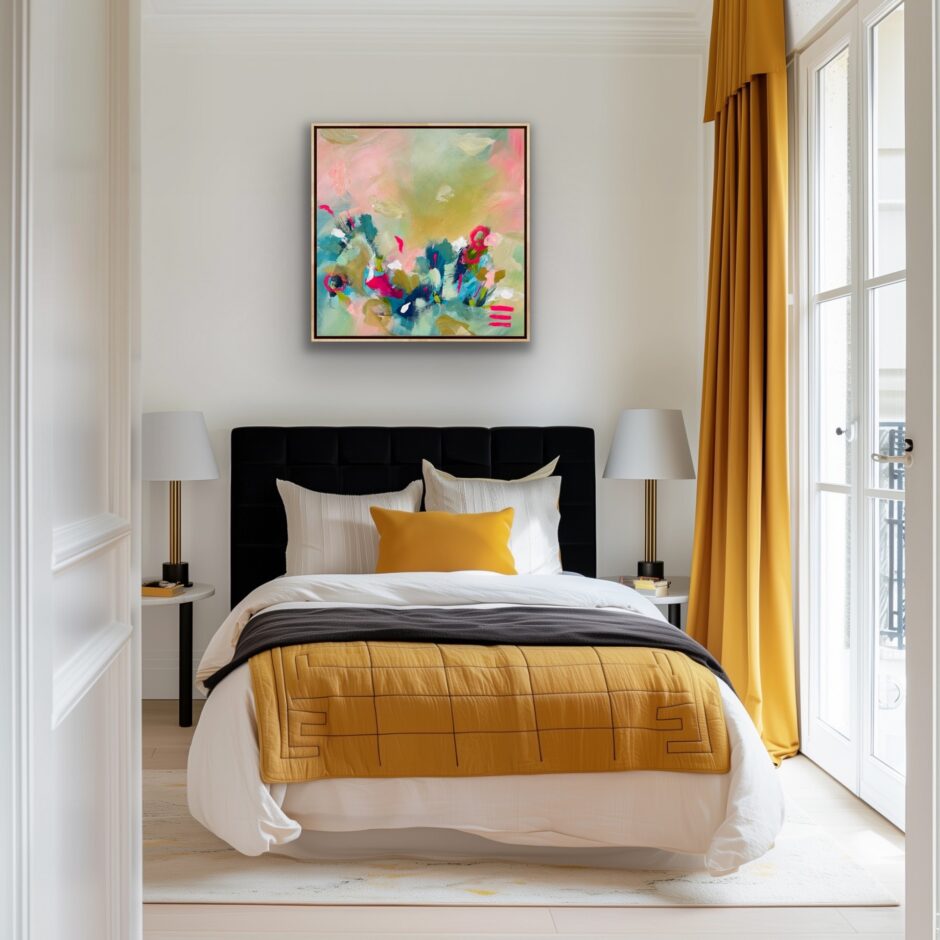
- Bedroom: A restful retreat—maybe opt for calming, soothing imagery.
- Home Office: Inspiring environment—might provide space for energizing or motivational art.
- Hallways: A great place perhaps for something really eye-catching or quirky?
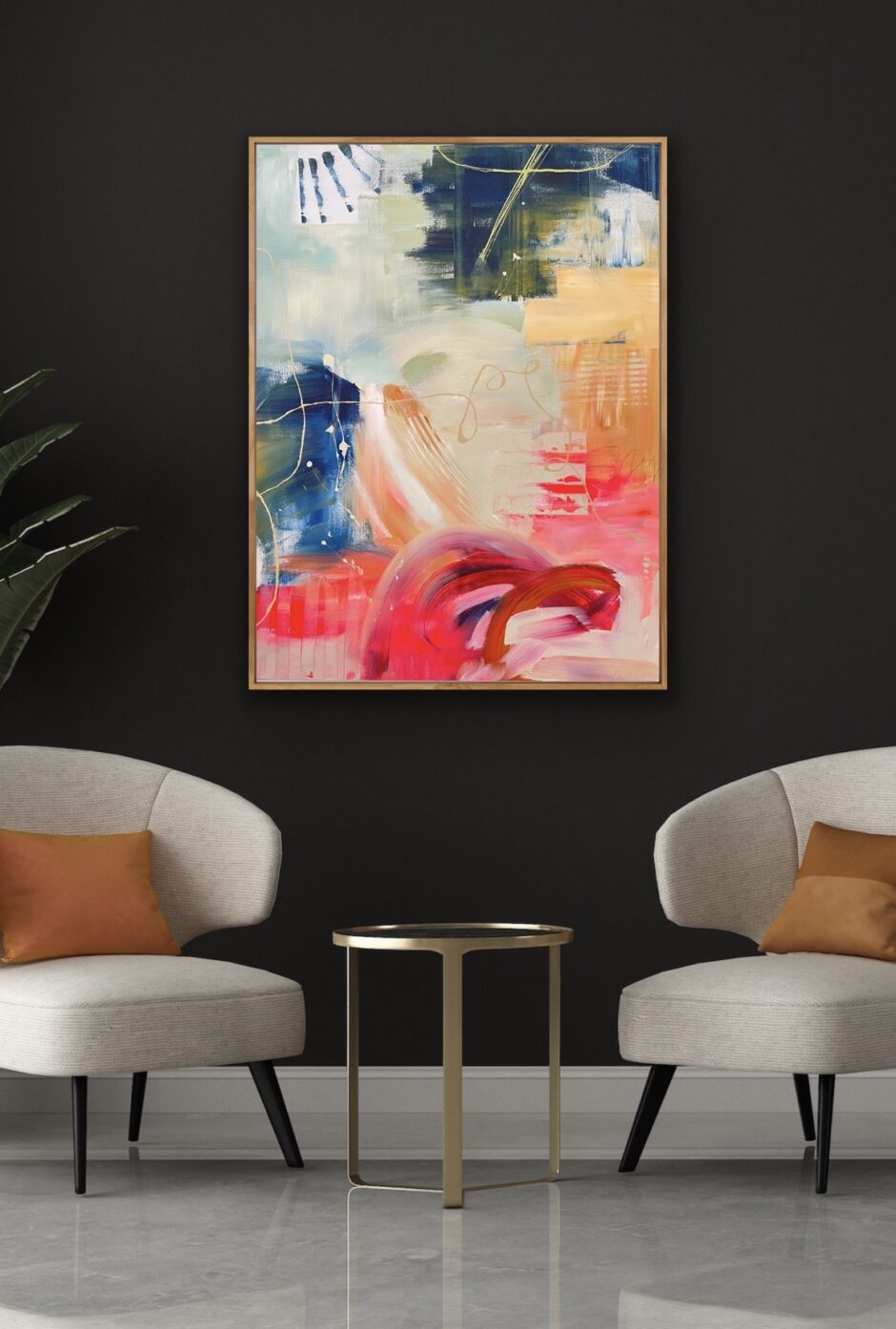
Scale & Proportion
Always measure the wall space before shopping. A large empty wall can handle a bold oversized piece or a gallery arrangement of several pieces.
For small nooks, consider smaller works or a cluster of miniatures.
Colour Harmony
- Complementary: Pick art that echoes accent colours in furnishings and textiles. Or even better, choose the art first then choose décor accordingly.
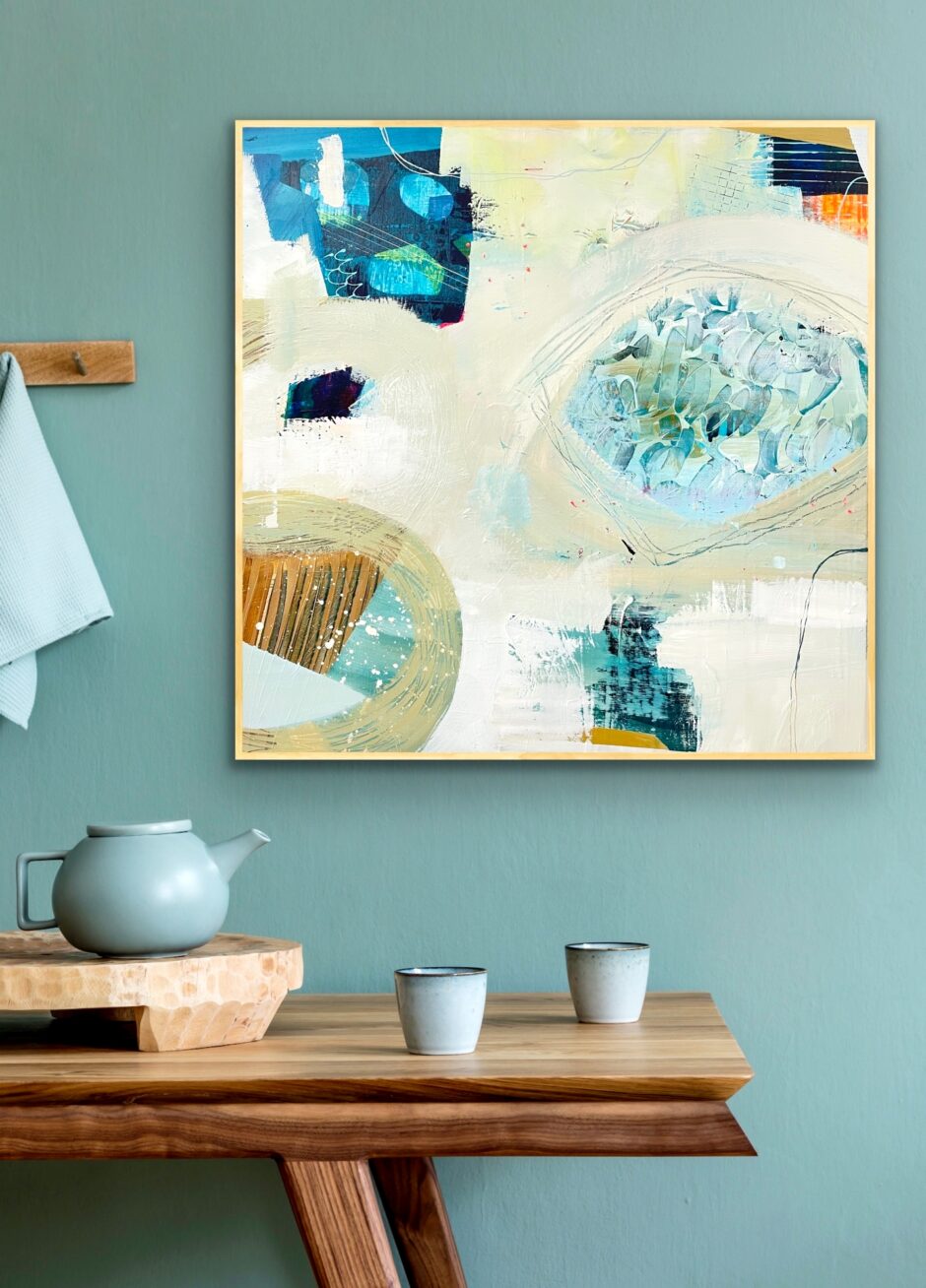
- Contrasting: Use art as a focal point for example introduce a bold hue that stands out against neutrals, or is a contrast against existing wall colours
- Generally speaking art with predominantly cool colours (blues/purples/greens) looks better on a warm toned wall and vice versa.
Art comes in many forms - consider mediums
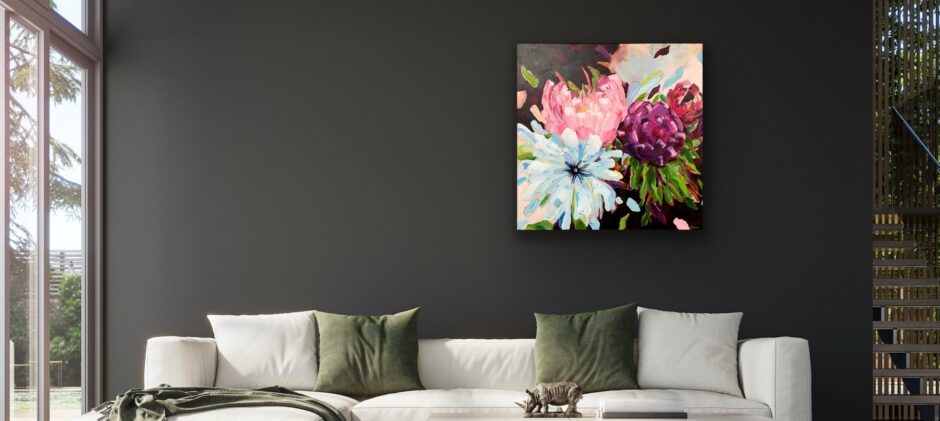
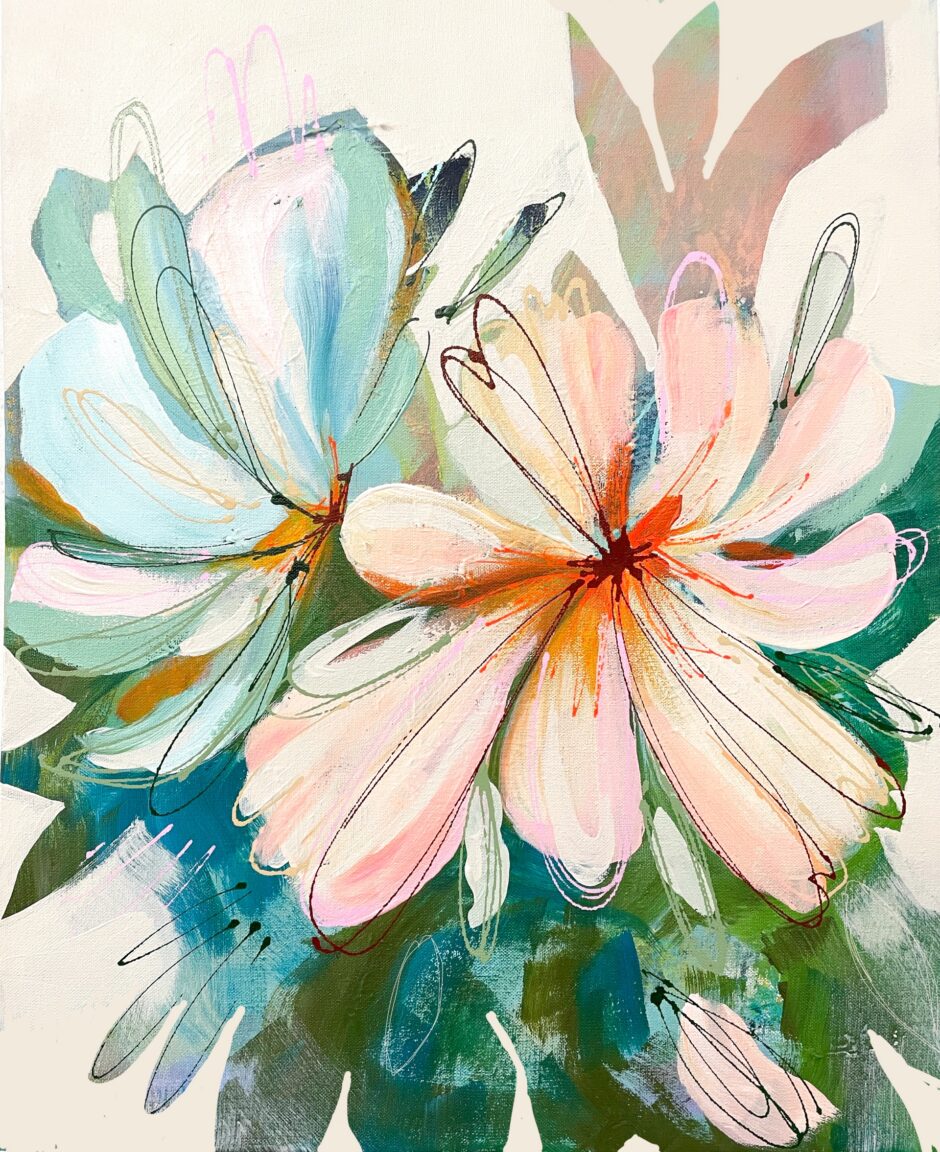
- Original paintings: Unique, often textured, can be a great investment. They have a tactile quality unique to the original.
- Giclée prints: Affordable, high-quality, archival reproductions of originals.
- Standard prints: cheapest option but quality can be variable. Cheaper prints may not be lightfast for very long and can fade quickly in bright sunlight
- NB all prints usually need matting and framing which can be a significant additional cost – although some may come in standard sizes where ready-made frames are readily available and affordable.
- Photographs Black & white are timeless and sophisticated. Colour photography captures a mood, travel memories, or personal moments.
- Sculpture & 3D Art Tabletop sculptures add interest to shelves and consoles. Wall-mounted reliefs combine painting and sculpture and bring a tactile depth.
- Mixed Media & Textile Art Collage, assemblage, fibre art and wall hangings all introduce texture and tactile appeal.
Set a Budget Range
Prices will vary according to the experience, skill level, and popularity of each artist
Emerging artists usually offer unique works at accessible prices.Established artists may mean a higher investment, but can also mean potential for appreciation.
(For higher-priced works, always request certificates of authenticity.)
Where to buy
Visit local galleries, art fairs, and studio open houses.
- Commission custom pieces to get a one-of-a-kind work that fits your space.
- Search on-line for artists in your vicinity, many will be happy to welcome you for a studio visit
- On-line marketplaces like Singulart or Saatchi art offer a bewildering amount of art. It is best to search specifically to filter for your requirements e.g.’large blue abstract painting’ rather than general scrolling which can be overwhelming!
- Bricks and mortar galleries that also have a big on-line presence like WychwoodArt.
- National and regional art fairs like The Affordable Art Fairs, The Other Art Fair, among others
Other things to consider – Make It Personal –
- Choose art that evokes an emotional response, that makes you feel something. Or art that resonates with your experiences—travel, meaningful symbols etc. Artwork with a story becomes a conversation starter.
- Mix it up – Pair an investment piece with affordable finds (vintage markets, student art). Nothing else matters other than that you love it. Eclectic layering adds depth and character.
- Trust Your Instincts. Ultimately, the most important rule is to choose what moves you! If a piece makes you smile, pause, or ponder, it is right for your home. Art is a personal journey—let your space reflect your passions, memories, and dreams.
Installation tips
Aim for the centre of the artwork to be at eye level (approx. 57–60″ from floor). Groupings & Galleries
- Grid layout: Structured, symmetrical display, or Salon style: Eclectic, varied sizes and frames, takes more thought and planning. Best to lay it out on the floor first to make sure that you are happy
- Use picture lights, track lighting, or adjustable wall washers to highlight key pieces.
- Avoid direct sunlight to prevent fading.
In summary
Selecting art for your home should be inspiring, not intimidating. By understanding your style, considering your space, exploring mediums, and trusting your instincts, you’ll curate a collection that brings beauty, meaning, and personality to your environment. Embrace the process which is in itself a creative endeavour—your walls are a blank canvas for self-expression and discovery.
Ready to start? Explore available artwork here, The perfect artwork for your home is just waiting to be found.